16 / 17Overview
Bowed Basement Wall Repair Around Murfreesboro, Explained
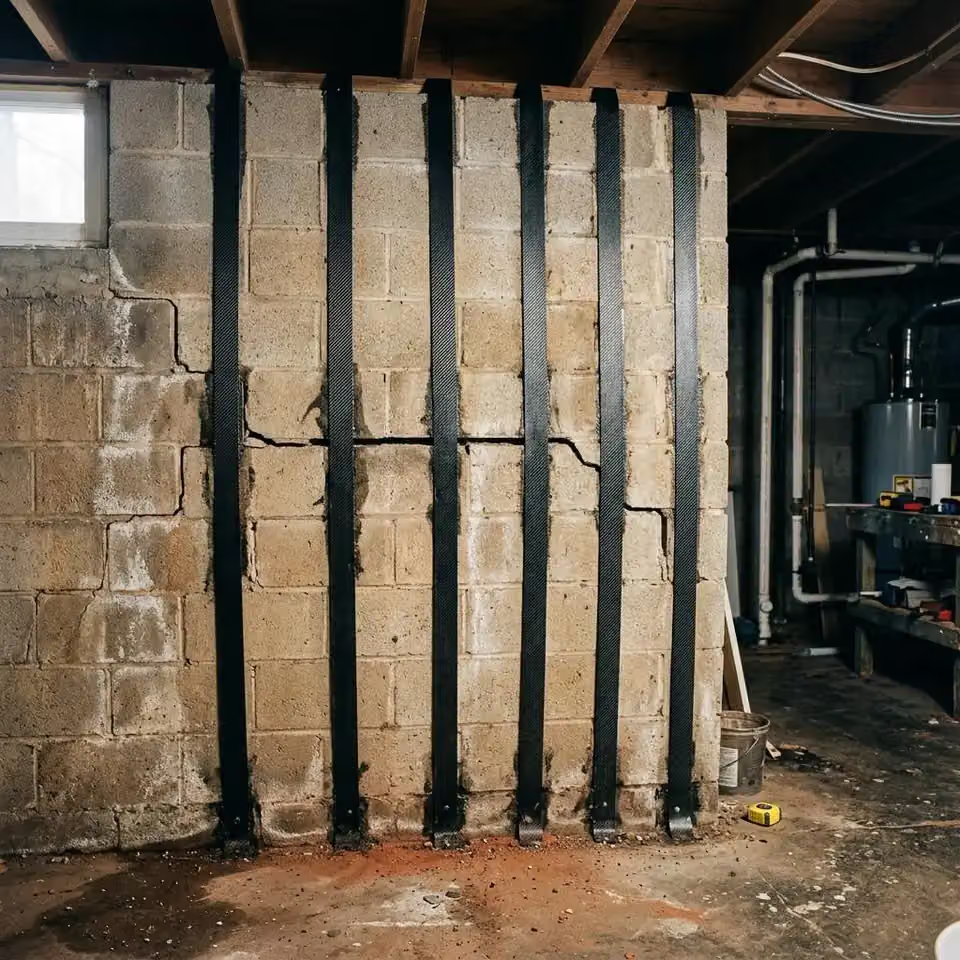
Clay soil holds water, and wet clay is heavy. Against a basement wall, that weight can push block or poured walls inward over time. Block walls often show a horizontal crack near mid height, with joints stepping toward the corners.
Bowed basement wall repair stabilizes the wall against further movement and, in some cases, allows gradual straightening.
Signs of a Bowing Wall
- A long horizontal crack across a block or poured wall
- Wall bulging inward when sighted along its length
- Stair step cracks running toward corners
- The top of the wall shifting relative to the sill plate
- Seepage along the horizontal crack
Reinforcement Options
Common methods include vertical steel beams anchored at the floor and secured to the framing above, and reinforcing straps bonded to the wall face. Some situations use anchors set into the yard outside, connected through the wall.
The choice depends on how far the wall has moved, the wall type, and what is outside. Severe movement may call for rebuilding a section of wall.
Bracing a Bowed Wall
- 01
Measure deflection
The amount of inward movement is measured along the wall.
- 02
Choose a method
Beams, straps, or anchors are selected for the condition.
- 03
Install reinforcement
Bracing is anchored and secured at planned spacing.
- 04
Reduce soil pressure
Drainage outside the wall is improved where practical.
Acting Before Movement Grows
Walls that have moved a small amount are much simpler to stabilize than walls that have moved a lot. Monitoring the crack width and wall alignment helps decide timing.
Since wet soil drives the pressure, gutter and grading improvements are a useful partner to any bracing.
Bracing is typically installed from inside the basement, so the yard is rarely disturbed unless exterior anchors or drainage are part of the plan. Shelving, stored boxes, and anything mounted on the affected wall should be moved back a few feet before work begins so the full length of the wall is reachable.