
06 / 17Overview
Foundation Crack Repair Around Murfreesboro, Explained
Nearly every concrete foundation develops a few hairline cracks as it cures. Those are usually harmless. Cracks that widen, shift out of plane, run horizontally, or let in water deserve a closer look, because they can point to settlement, soil pressure, or drainage problems.
Foundation crack repair covers both sealing the crack itself and, when needed, addressing the movement behind it. Sealing alone is right for some cracks and only a cosmetic patch for others.
Cracks Worth a Professional Look
- Horizontal cracks in basement or block walls
- Cracks wider than a coin edge or wider at one end
- One side of the crack sitting farther out than the other
- Water or damp staining along a crack after rain
- Cracks that have grown since you first noticed them
How Cracks Are Repaired
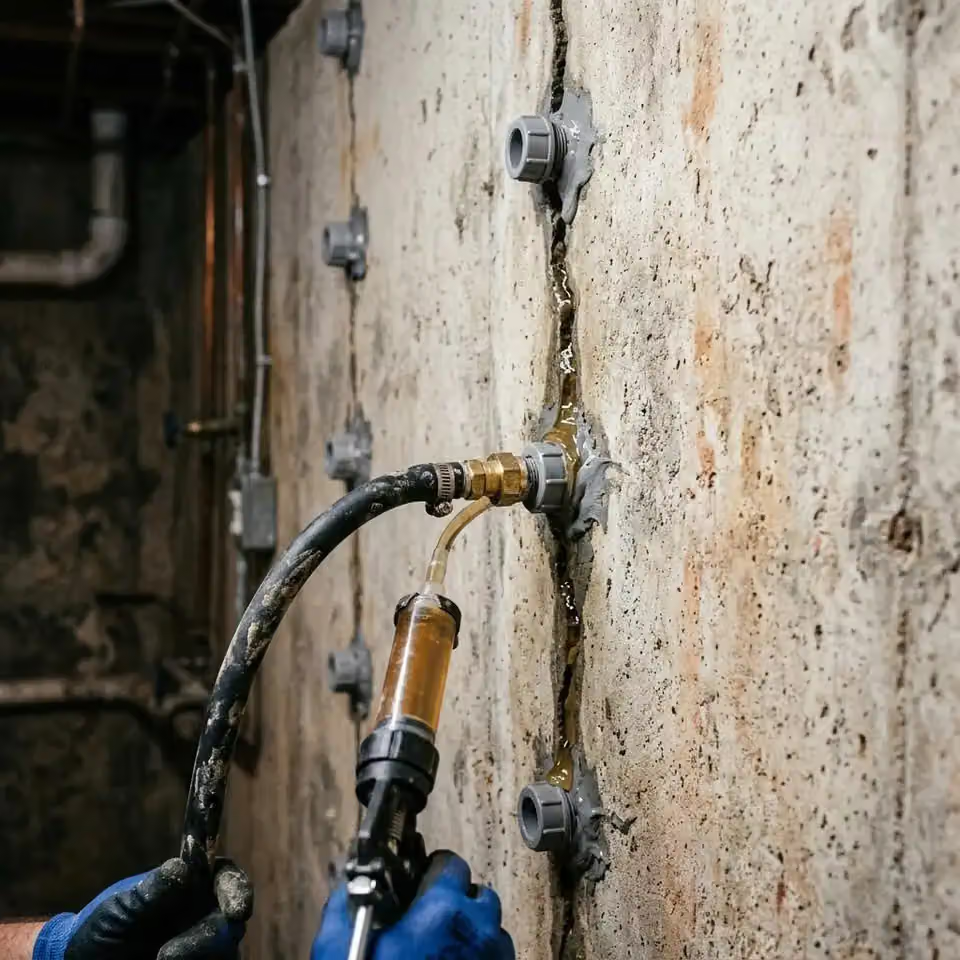
In poured concrete walls, cracks are commonly sealed by injecting a resin or foam that fills the crack through the wall thickness. In block walls, repair may involve repointing mortar joints or addressing the wall as a whole if it has moved.
When a crack is a symptom of settlement or wall pressure, the plan also includes the structural repair, such as piers or wall bracing, so the crack does not simply reopen.
Steps for a Typical Crack Repair
- 01
Measure and document
Width, length, direction, and any offset are recorded.
- 02
Identify the cause
Nearby drainage, settlement signs, and wall alignment are checked.
- 03
Prepare the surface
The crack is cleaned and fitted with ports or prepared for sealing.
- 04
Seal and monitor
Material is injected or applied, and the area is noted for future checks.
Tracking a Crack Yourself
A simple habit helps any assessment: mark the ends of a crack with a pencil and the date, and take a photo with a coin or ruler beside it. Over a few months, that record shows whether the crack is active.
Share those photos when you call. They make the first conversation far more useful.